
Francis McGahern’s Changing Roles
The Greatest Beer Run Ever: A Memoir of Friendship, Loyalty, and WarFrancis’s life moves through the authority of policeman, husband, father, and aging man without a settled reckoning with his past.
increasing Bearing strength in each event
 decreasing
Bearing strength in each eventdecreasingA Hidden Past

A Hidden Past
Soldier and Recruit
Francis (Frank) McGahern leaves Latin school for the Irish Republican Army and then enters the new Garda Force. He never explains these years to his children.
A Closed History
His silence leaves the family with fragments rather than an account of his past. The mystery becomes part of the authority he exercises at home.
The Sergeant’s Authority
The Sergeant’s Authority
Public Standing
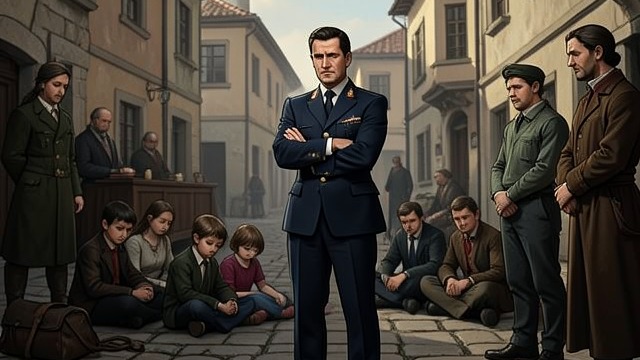
As a rural sergeant, Francis (Frank) McGahern embodies the law and expects deference. His uniform, records, and rituals reinforce his position.
Private Violence
At home, the same insistence on command becomes scolding and beatings. The public role shields behavior that the household learns to fear.
An Ambivalent Courtship

An Ambivalent Courtship
Repeated Attempts
Francis seeks a new wife through several unsuitable matches and efforts to recruit a housekeeper. His desire for companionship is bound to his need to control the household.
A New Marriage
He eventually marries Agnes McShera. Their household offers outward order but does not undo the old family tensions.
Retirement and Displacement

Retirement and Displacement
Losing the Uniform
After retirement, Francis moves to The Nurseries in Grevisk. Without the sergeant’s office, he loses a source of public authority and protection.
A New Performance
He tries to draw his adult children back through plans, letters, and appeals to family loyalty. The role of Daddy becomes his most persistent identity.
A Death Anticipated
A Death Anticipated
The Trunk and Instructions
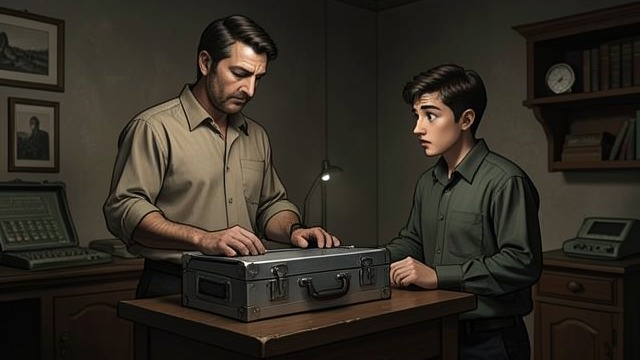
Francis tells his son he may die in hospital and leaves him a key to a metal trunk containing documents and money. He instructs the boy to provide for the family.
A Fantasy of Control
He recovers quickly, and the plan is never carried out. Even in apparent vulnerability, he places an impossible responsibility on his son.
before the narrator’s birth
the narrator’s childhood years
after Susan McGahern’s death
late 1950s
when John McGahern is fifteen
